Tidal disruption simulation selected as finalist at Supercomputing 2026
A visualization based on new tidal disruption simulations by Noah Kubli and Lucio Mayer from the Department of Astrophysics at UZH, together with Sebastian Keller from CSCS, has been selected as a finalist for display at Supercomputing 2026 in Chicago, one of the world’s leading events in high-performance computing.
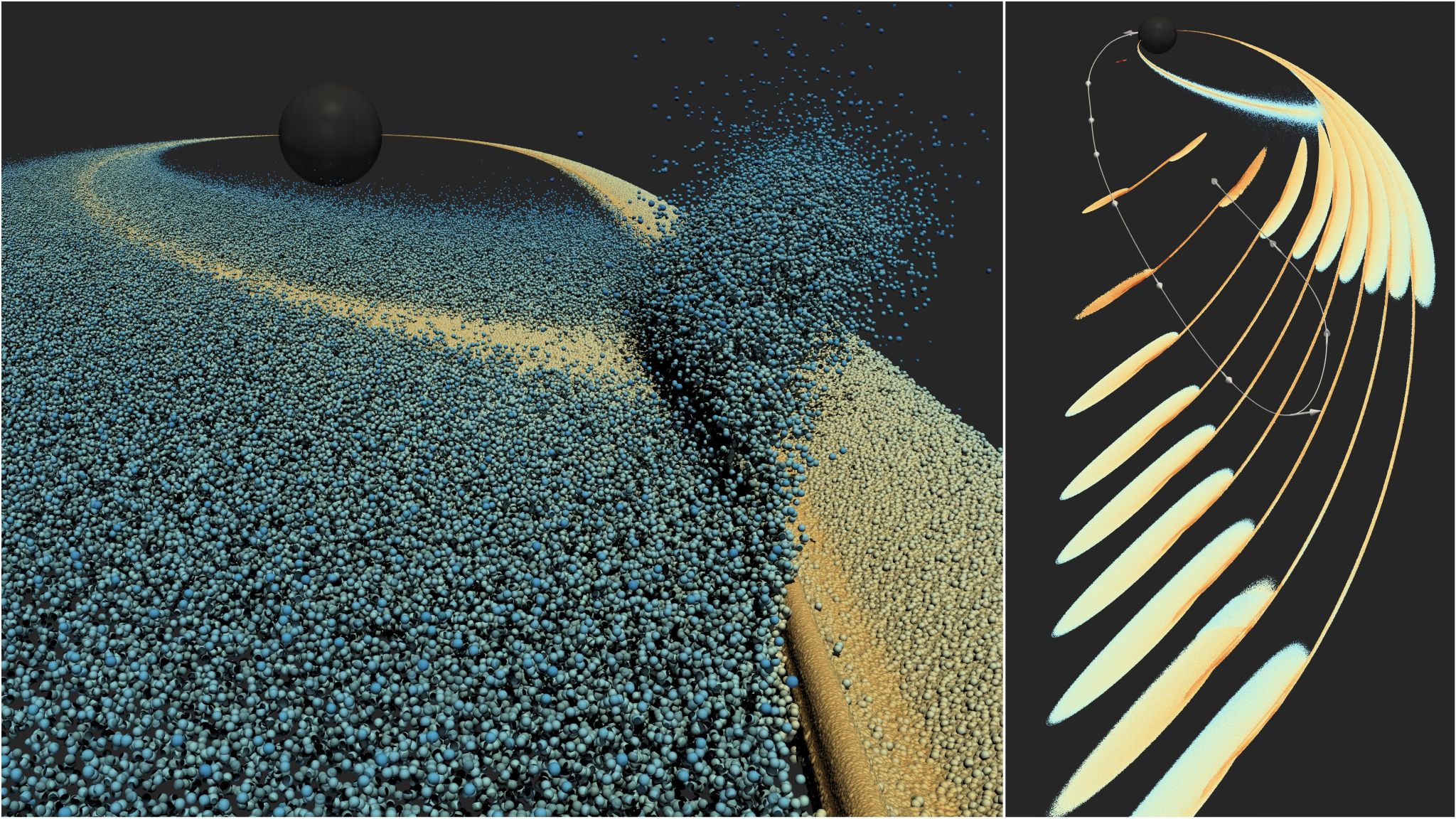
The simulation, performed using the SPH-EXA code, follows a star as it passes close to a supermassive black hole, is torn apart by extreme tidal forces, and forms a stream of stellar debris that subsequently interacts with itself. The visualization was created by Jean Favre at CSCS and computed and rendered on the Alps supercomputer.
Congratulations to Noah, Lucio, Sebastian, Jean, and everyone involved!
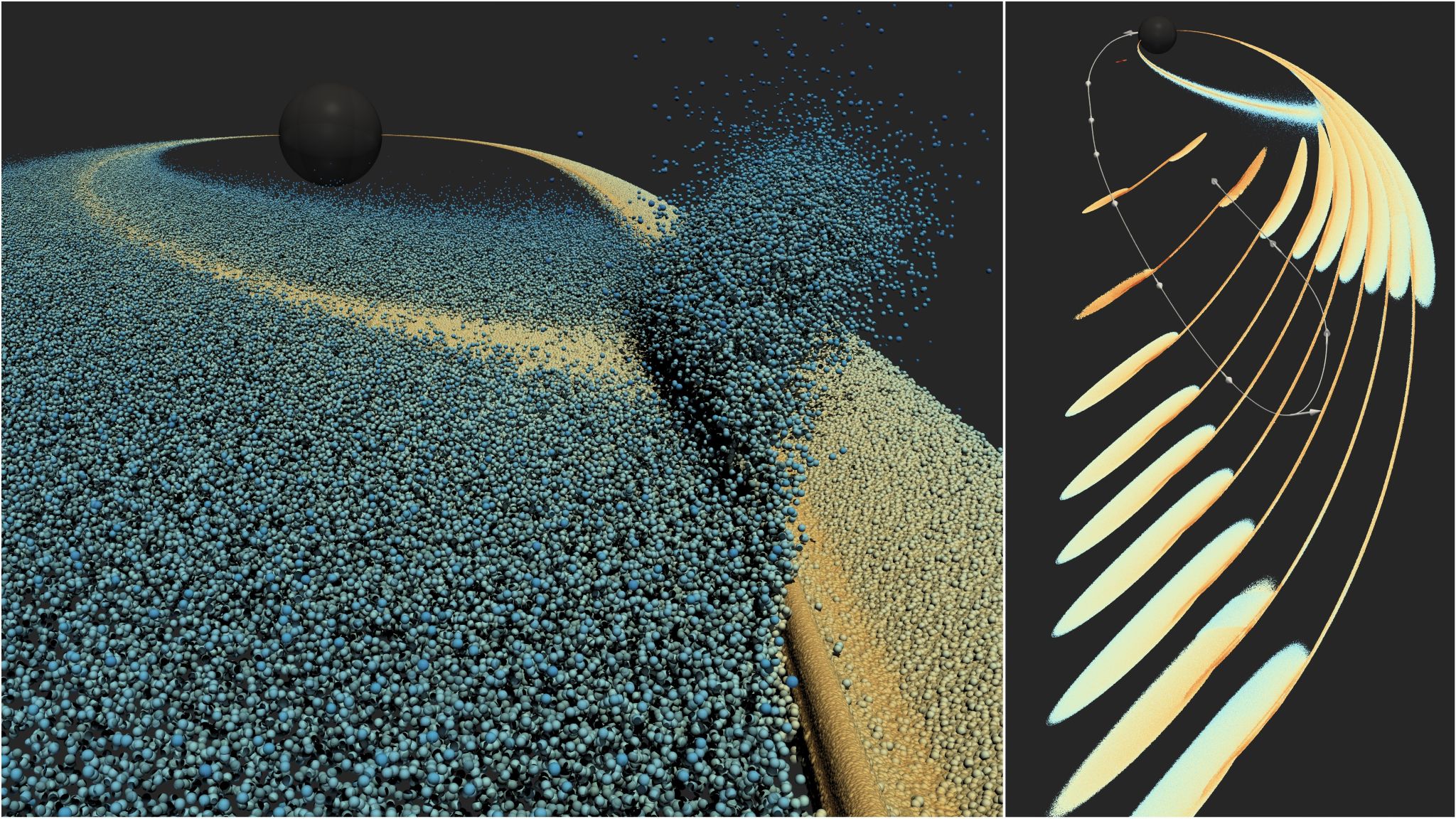
Left: Close-up of a tidal disruption event: a star has been torn apart by the extreme tidal forces of a supermassive black hole. The individual points represent simulated gas particles from the star. The elongated debris stream orbits the black hole and eventually intersects with itself – a key process contributing to the observable emission from such events. The simulation was performed using the SPH-EXA code.
Right: Several moments from the same simulation are combined in a single view. They show the evolution of the star as it approaches the black hole, is progressively stretched by tidal forces, and ultimately forms a long, thin stream of stellar debris.
Simulation: Noah Kubli and Lucio Mayer, Department of Astrophysics, University of Zurich,
and Sebastian Keller, CSCS
Visualization: Jean Favre, CSCS | Computed and rendered on the CSCS Alps supercomputer
More information:
Probing supermassive black holes: simulations reveal a new pattern in torn-apart stars
Reference:
N. Kubli, A. Franchini, E.R. Coughlin, C.J. Nixon, S. Keller, P.R. Capelo, and L. Mayer: Tidal Disruption Events with SPH-EXA: Resolving the Return of the Stream. (2026) ApJL 999 L40. DOI: doi.org/10.3847/2041-8213/ae4748